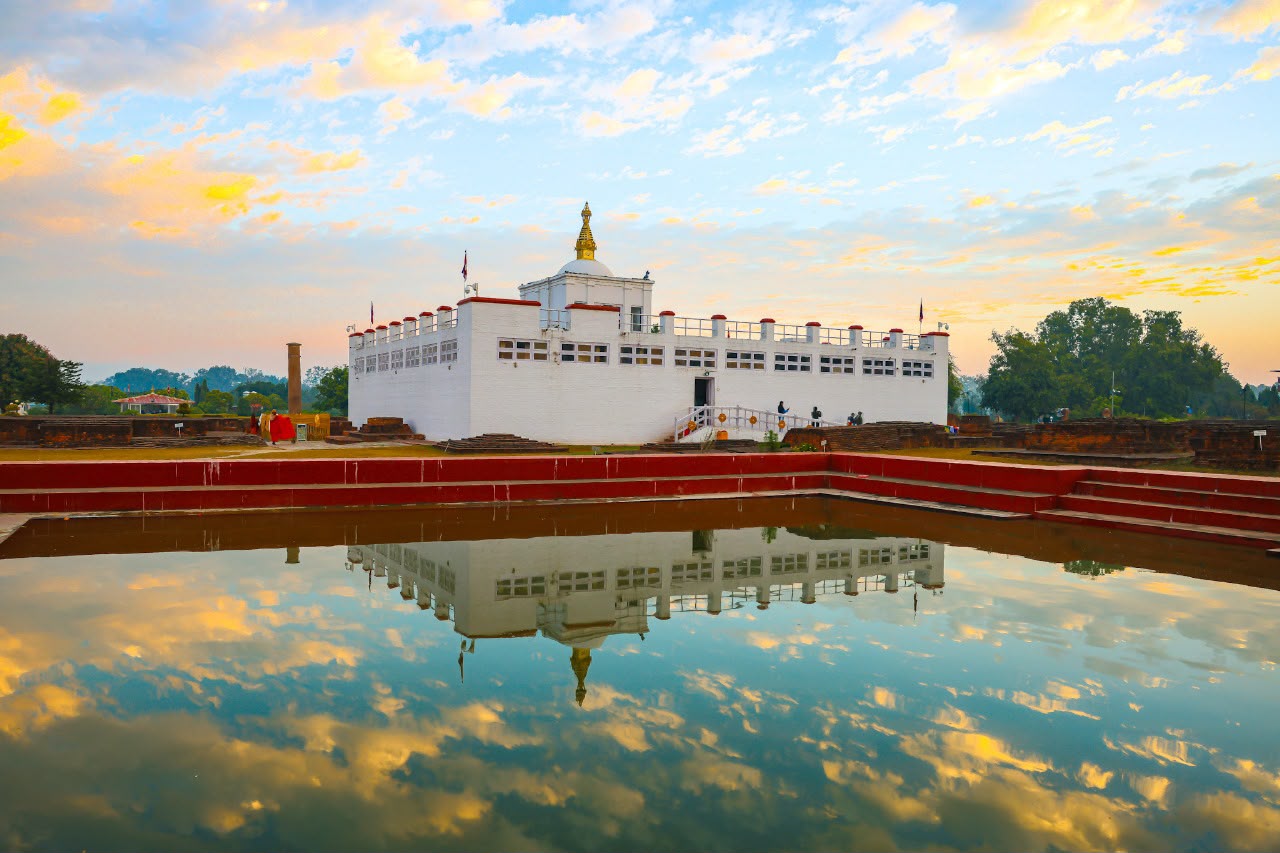
On August 12 (27 Shrawan) in Kathmandu, reports indicate that monasteries in Lumbini, the
birthplace of Gautama Buddha and symbol of peace and nonviolence, are experiencing
challenges. These issues are reportedly caused by actions taken by senior officials and staff of
the Lumbini Development Trust.
Stakeholders report that officials and staff of the Trust have increasingly caused difficulties for
monasteries involved in the effort to make Lumbini a hub for Buddhist pilgrims from around the
globe, which has prevented them from completing their projects on schedule.
Since its establishment in 1985 to foster Lumbini’s development, the Lumbini Development
Trust has encountered recent issues, including allegations of corruption and internal political
conflicts. It seems that officials and staff appointed through political recommendations have
started hindering Lumbini’s progress.
At the iniPaPve of the United NaPons, Japanese architect Kenzo Tange was entrusted in 1972
with developing Lumbini as a center of world peace and a beauPful desPnaPon. According to
records of the Lumbini Development Trust, Tange spent six years preparing the master plan and
submiUed it to the Government of Nepal in 1978 for implementaPon. The Nepalese
government approved the master plan that same year and began its implementaPon.
Work began with the goal of completing the first phase by 1985 and the second by 1995.
However, it is embarrassing that the plan has still not been completed, allegedly due to
commissions and corruption.
Local residents say that even after 48 years, the Lumbini Master Plan, prepared for the area’s
overall development, has not been completed because of the alleged vested financial interests
of administrative officials and employees.
Kenzo Tange’s master plan aimed to complete Lumbini within 17 years, dividing the
development into three main areas: the Sacred Garden, the International Monastic Zone, and
the New Lumbini Village. Scholars consider it unfortunate that this vision remains unfulfilled.
Allegations have been made that Trust officials and staff illegally demand substantial sums of
money when allocating land to foreign monasteries under construction in the Monastic Zone.
Reports also indicate that illegal payments are requested during construction activities on
leased land. Buddhist monks involved in building monasteries, from Nepal and other countries,
claim that those who refuse to pay face harassment through various pretexts.
Dispute Over the World Peace Sanctuary
The World Peace Sanctuary, being constructed by Rangrig Yeshe Inc. in the InternaPonal
MonasPc Zone, has also allegedly faced various forms of obstrucPon from officials of the
Lumbini Development Trust.
In 2013, the Trust entered into a 99-year lease agreement with the US organization
constructing the World Peace Sanctuary to build a monastery on Plot No. WB-5. However, after
determining that the land was insufficient, the organization requested additional land from the
Trust. According to the organization, the Trust failed to provide the additional land on time,
resulting in a three-year delay in construction.
Aeer repeatedly requesting that the Trust proceed with construction of the Sanctuary on two
additional plots—WB-14 and WB-18—the organization reportedly leased those plots to Rangrig
Yeshe Inc. for 99 years in 2017.
Following the acquisiPon of the addiPonal land, construcPon began. However, the builders say
that earthquakes and the COVID-19 pandemic prevented them from finishing the project on
schedule.
A construction representative said: “When construction became difficult because of COVID-19,
we submitted an application to the Trust requesting an extension of the construction period.
However, the Trust did not even register our application for nine months, causing us
considerable hardship.”
The Sanctuary members allege that, during construcPon, then-Member Secretary of the Trust
Sanu Raja Shakya and senior administraPve official Gyanin Rai directly threatened to terminate
the 99-year land lease on the grounds that construcPon had not been completed within the
required period.
According to sanctuary members, when the sanctuary refused to respond to the alleged threats
and demands, the Trust gave Plot No. WB-14, which had been allocated to the peace sanctuary,
to another local organizaPon.
According to the sanctuary staff, the agreement concerning Plot No. WB-18 was also
terminated by the Trust. However, after that a dispute arose, and the plot was subsequently
returned to the sanctuary.
The sanctuary members allege that Plot No. 14 of Rangrig Yeshe Inc. was handed over to Tukche
Choling Monastery in collusion with officials of the Trust and without informing the sanctuary
members. Unfortunately, the maUer eventually reached the courts.
The sanctuary members’ representaPves say that both the Rupandehi District Court and the
High Court of Butwal ruled that the disputed plot should be returned to Rangrig Yeshe Inc., but
the Trust has not complied with those rulings.
Interestingly, the sanctuary members allege that when the land previously allocated to it as
WB-14 was later given to Tukche Choling Monastery, the Trust changed the plot’s designation
to WC-14, allegedly to manipulate the records.
After the court rulings prevented the Trust from transferring the land to another party as it
wished, the sanctuary members say the Trust again issued threatening correspondence
regarding Plot No. WB-18, which had already been developed with a semi-underground
building housing mechanical, electrical, ventilation, and plumbing (MEVP) systems at an
investment of more than NPR 50 million. The sanctuary members allege that the Trust
threatened to demolish the semi-underground structure for parking, even though sanctuary
members had designated a large parking area in front of the MEVP building.
Local residents say the Trust had already approved the project’s Detailed Project Report (DPR),
which specified what would be constructed, how it would be constructed, and the amount of
land to be used. They therefore believe that threats to demolish structures built under the
approved plan, made under various pretexts, indicate conflicts of interest among Trust
employees.
Many organizaPons in Lumbini have signed agreements to build monasteries but have not
completed their projects even aeer many years. Local residents quesPon why the Trust remains
silent about those projects while allegedly causing repeated difficulPes for Rangrig Yeshe Inc.
The WB-14 plot allocated to Rangrig Yeshe Inc. was ordered by the court to be returned to the
Rangrig Yeshe organizaPon, but representaPves of the organizaPon say that the administraPon
of the Trust has not complied with the court’s order.
Dispute Over the Lease Agreement
According to ArPcle 4 of the agreement between the Lumbini Development Trust and Rangrig
Yeshe Inc. regarding the lease of land, any dispute is to be resolved through negoPaPons. If the
dispute cannot be resolved through negoPaPons, it is to be seUled through arbitraPon
mediaPon.
Legal experts say that because the Trust lacks the legal authority to arbitrarily terminate the
land lease under the terms of the agreement, taking Rangrig Yeshe Inc.’s land and transferring it
to another party would be illegal and contrary to the law. The District Court and High Court
have reportedly ruled on this basis in favor of Rangrig Yeshe Inc.
Representatives of Rangrig Yeshe Inc. say that although the courts have ruled in their favor, the
Trust has been reluctant to implement the rulings and still has not complied with them after
three months.
AcPng Member Secretary of the Lumbini Development Trust, Gyanin Rai, says that Plot No. 14
was given to another organizaPon because the agreement had not been complied with.
He said that under the rule that one organizaPon may receive only one plot, two of the three
plots previously allocated to the organizaPon were withdrawn.
However, according to an employee of the Lumbini Development Trust who spoke on condiPon
of anonymity, the Trust has given three of the larger plots to the Chinese Temple. The employee
also claimed that the Thai and Burmese monasteries each received three plots, while a new
monastery had more recently been given two large plots despite rules that allegedly prohibit
such allocaPons.
AcPng Member Secretary Rai says that Rangrig Yeshe Inc. has recently been construcPng
structures by encroaching on 15 meters of public land, and that the organizaPon was therefore
instructed to clear the encroached area and the parking area.
However, the organizaPon claims that a compound already existed on the land before the lease
agreement was signed.
RepresentaPves of Rangrig Yeshe Inc. say they constructed the structures on the land
designated by the Trust and accuse the Trust of creaPng various excuses to obstruct their work
and cause them difficulPes.
They say they have become deeply frustrated by the Trust’s acPons.
Selective Enforcement Alleged
The World Peace Sanctuary is not the only monastery in Lumbini that has failed to complete
construcPon within the Pmeframe specified in its agreement. Local residents point to the
Korean monastery, Bhutanese monastery, Thousand Buddha Temple, Vietnamese monastery,
and several others that have not completed construcPon aeer twenty years.
They quesPon why the Trust allegedly singles out Rangrig Yeshe Inc. for repeated acPon while
remaining silent about other projects that have also failed to meet their contractual deadlines.
Allegations of Obstructing the Campaign for Lumbini as a Global Destination of Peace
The Lumbini Development Trust has also been accused of obstrucPng the campaign by Buddhist
spiritual leaders to establish Lumbini as a global desPnaPon for peace.
There have been numerous complaints that officials and employees of the Trust do not allow
work to proceed without paying commissions or bribes.
As a result, criPcs say, Lumbini is failing to become the desPnaPon envisioned for Buddhist
pilgrims and followers from around the world.
CiPzens have called on the Balen government, which they say was formed to end corrupPon and
promote good governance in Nepal, to understand the situaPon in Lumbini and appoint officials
who will work for Lumbini’s development, rising above personal and poliPcal interests.
More recently, following the appointment of an acPng Member Secretary at the Lumbini
Development Trust, monasteries have accused Trust employee Gyanin Rai of sending
threatening correspondence and deliberately highlighPng various shortcomings to cause
difficulPes for monasteries.
The monasteries and other stakeholders concerned with Lumbini’s development are therefore
calling for greater transparency, accountability, imparPal administraPon, and effecPve
implementaPon of the Lumbini Master Plan so that the birthplace of Gautama Buddha can
finally realize its potenPal as a genuine global center of peace, pilgrimage, and Buddhist heritage