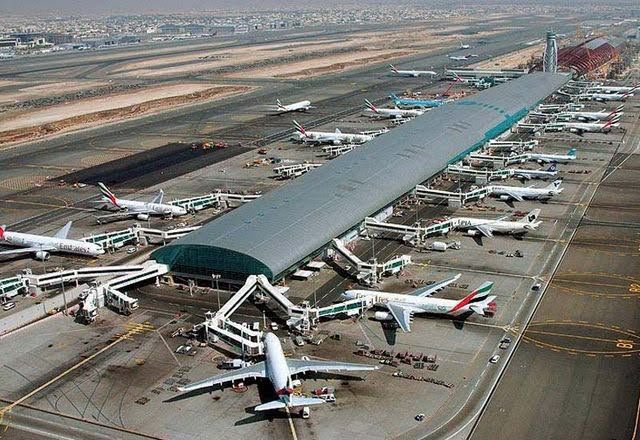
Bhairahawa, september 30 : Hamad International Airport in Qatar, one of the world’s major aviation hubs, and Nepal’s Gautam Buddha International Airport share modern international-standard infrastructure, but there is a significant gap between them in terms of operations, passenger volume, flight networks and airport utilization.
Built as the gateway to Lumbini’s tourism sector, Gautam Buddha International Airport is still waiting for sustained international flights, while Hamad International Airport has established itself as a global aviation hub handling hundreds of international flights every day.
Hamad International Airport served 54.3 million passengers in 2025. During the same year, the airport recorded 282,975 aircraft movements, including arrivals and departures—an average of around 775 aircraft movements per day. The airport has connectivity through 57 airlines to destinations around the world. Following its latest expansion, Hamad can handle more than 65 million passengers annually, while 17 new aircraft contact gates have increased the total number of such gates to 62.
In comparison, Gautam Buddha International Airport has the basic infrastructure required to operate international flights. The airport has a 3,000-meter runway and separate aprons for international and domestic aircraft. According to the Civil Aviation Authority of Nepal, the international apron can accommodate five narrow-body aircraft or four aircraft, consisting of three narrow-body and one wide-body aircraft.
The major challenge for Gautam Buddha International Airport, however, appears to be less about infrastructure and more about establishing a regular and sustainable international air network. Although several foreign airlines have operated flights from the airport at different times since its opening, those services have not developed into regular, long-term operations.
A major factor behind Hamad’s success is its hub model, which connects numerous countries and cities through a single airport. With Qatar Airways at its center, Doha connects passengers to destinations across Europe, Asia, Africa, the Middle East, the Americas and Australia. The airport also functions as a major transit hub, allowing passengers to connect between different destinations.
For Gautam Buddha International Airport, the immediate potential lies in connecting Lumbini’s religious and tourism market, Nepal’s western region, and India’s neighboring border markets with the international aviation network.
Tourism entrepreneurs say the airport’s utilization could increase significantly if regular flights were developed to serve visitors from Sri Lanka, Thailand, Myanmar, Vietnam, South Korea, India and other key Buddhist and tourism markets visiting Lumbini.
Compared with Hamad’s 282,975 aircraft movements in 2025, the current level of activity at Gautam Buddha International Airport is relatively small. However, the two airports differ significantly in size and role. Rather than treating Hamad’s passenger and flight volumes as a direct target, aviation experts say Nepal should learn from its hub model and focus on developing regular airlines and destinations from Bhairahawa.
Establishing at least one strong international hub airline as a regular operator at Gautam Buddha could create opportunities for passengers to access a wider range of destinations through connecting hubs. Regular flights to Doha, Dubai, Abu Dhabi, Bangkok, Kuala Lumpur, Delhi and other regional hubs could connect Lumbini’s tourism market with western Nepal and neighboring Indian markets.
With the airport’s 3,000-meter runway, international terminal, apron and aircraft parking facilities already in place, the key challenge now is attracting airlines, securing sufficient passenger demand and developing sustainable international destinations.
The experience of Hamad International Airport demonstrates that constructing a large airport alone is not enough to establish it as an international hub. Regular airline services, adequate passenger demand, transit traffic, diverse destinations, competitive services and a strong air network are essential.
Tourism and business representatives have called for a long-term government strategy to develop Gautam Buddha International Airport not only as the gateway to Lumbini but also as an international aviation center for western Nepal.
Before expanding the airport’s capacity, they argue, Nepal should focus on making full use of the infrastructure already available and creating a foundation for regular international flights.
In this sense, the central question for Bhairahawa is no longer whether the airport can be built, but how regular international flights can be brought to an airport that has already been built. Finding a practical answer to that question will play a decisive role in determining the future of Gautam Buddha International Airport.
Krisha Sanchar Griha P. LTD.
SiddharthaNagar-12, Rupendehi
E-mail: elumbinikhabar1@gmail.com
Contact: 9851351793
Department of Information and
Broadcasting Regd. No:3214/78/79
Press Council Registration No. 3262/2078/079